
Application
Practically every hydraulic circuit is built from the same six components — sized and combined for the job.
Components of hydraulic systems
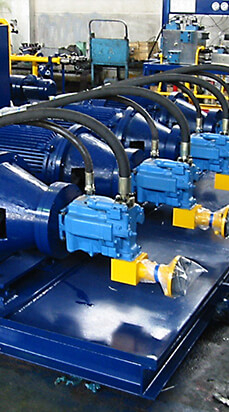
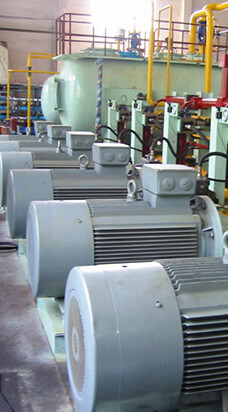
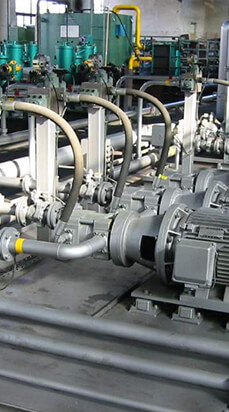
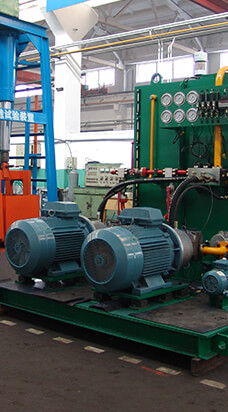
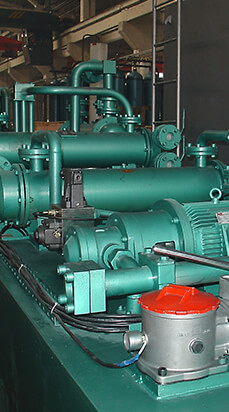
How sophisticated a system is depends on its application. A complete power unit packages its own motor, pump, coupling, reservoir, piping, gauges and valves.
Holds the liquid — usually hydraulic oil.
Forces the liquid through the system.
An electric motor or other drive that turns the pump.
Control the liquid's direction, pressure and flow rate.
Turns fluid energy into force or torque — cylinders for linear motion, motors for rotary motion.
Carries the liquid from one location to another.
Advantages
Simple levers and push buttons let an operator start, stop, speed up and slow down with precision.
Without bulky gears or pulleys, fluid power scales force from a fraction of a pound to hundreds of tons.
Fluid power can hold force or torque constant regardless of speed changes.
Fewer moving parts than mechanical or electrical systems make them simpler to maintain.
Industries
Solutions
Send us a part number and we'll check stock and pricing.